
How to Store Vitamin C Serum So It Actually Lasts
Light, heat and air are what degrade vitamin C, and a bathroom shelf supplies all three. What storage actually helps, what the fridge does and does not do, and when to throw a bottle out.
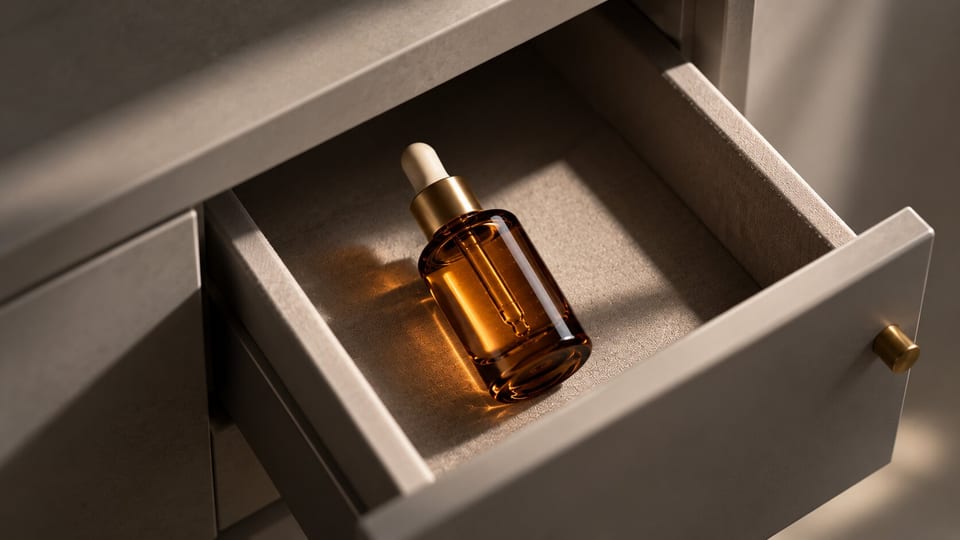
Vitamin C is reactive — that is what makes it an antioxidant and what makes it fragile. Three things speed up its breakdown: light, heat and oxygen. Storage is just the business of limiting all three.
Where to keep it
- A drawer or closed cupboard, away from the window. Dark and stable beats convenient.
- Out of the bathroom if you can. Shower heat and humidity are the worst combination it can sit in. A bedroom drawer is better.
- Not on a sunny shelf. Direct sun through glass will do real damage over weeks, even to an amber bottle.
- Cap closed properly, every time. A dropper left resting in the neck keeps the formula open to air.
Does the fridge help?
For a pure L-ascorbic acid serum, cool storage genuinely slows degradation, and it makes the serum feel pleasant in Indian summer. Two caveats: moving a bottle between cold and warm repeatedly causes condensation inside, and water is part of what degrades the active — so keep it in the fridge consistently rather than shuttling it back and forth. For stable derivatives, the fridge is a comfort choice, not a preservation one.
Packaging is doing most of the work
Storage habits cannot rescue a bottle that exposes the formula to air every use. An airless pump keeps oxygen out structurally; a wide-mouthed clear dropper bottle does the opposite. This is covered in airless pump vs dropper, and it is worth weighing before you buy rather than after.
How long after opening?
Follow the period-after-opening symbol on the carton — the small open-jar mark with a number of months. For L-ascorbic acid serums that figure is usually short, and it assumes reasonable storage. Treat it as an outer limit, not a guarantee, and buy a size you will realistically finish inside it. A large bottle at a good price is not a saving if a third of it oxidises.
Knowing when it has gone
Colour is the usable signal. Most L-ascorbic acid serums start clear or very pale and drift yellow, then orange, then brown as they oxidise.
- Clear to pale straw: fine.
- Distinctly yellow: degrading. Use it up soon.
- Orange or brown: past useful. Replace it.
A metallic or sharp smell, or a texture that has turned sticky, points the same way. Note that some derivative serums and ones with added botanicals are tinted from the start, so colour alone is not a verdict there — more on reading oxidation.
Does an oxidised serum harm skin?
The practical concern is that it has stopped delivering what you bought rather than that it has become dangerous. Still, there is no reason to keep applying a degraded formula. If you are mid-bottle and it has turned, the honest answer is that the remaining product is not doing the job — and the next bottle should be a smaller one, better packaged, or stored somewhere cooler. Compare packaging across every serum we track.
Common questions
Should I keep vitamin C serum in the fridge?
Cool storage genuinely slows degradation for L-ascorbic acid and feels pleasant in summer. Keep it there consistently rather than moving it in and out, which causes condensation inside the bottle. Stable derivatives do not need it.
How long does vitamin C serum last once opened?
Follow the period-after-opening symbol on the carton, the open-jar mark with a number of months. Treat it as an outer limit that assumes sensible storage, and buy a size you will finish within it.
Can I still use a yellow vitamin C serum?
Pale straw is fine. Distinctly yellow means it is degrading, so use it up soon. Orange or brown means it is past useful and should be replaced.
Is it bad to keep serum in the bathroom?
It is the worst common spot, because shower heat and humidity both speed up degradation. A bedroom drawer is a better default.
Compare vitamin C serums sold in India → or browse ingredient explainers and picks by skin type and budget.
More from the blog
- How to Read the Efficacy Claims on a Vitamin C SerumGuide · 2 min read
- Why Vitamin C Serums Are Starting to Add Carnosine and Other Anti-Glycation ActivesIngredients · 3 min read
- Nine Vitamin C Serum Myths Worth DroppingMyths · 3 min read
- Airless Pump vs Dropper Bottle: Why Vitamin C Packaging Decides Shelf LifeGuide · 3 min read
We are not dermatologists. This content is for informational purposes only — consult a qualified professional for medical advice. See our editorial policy and medical disclaimer.