
Microneedling for Melasma: Vitamin C Holds Its Own Against Tranexamic Acid in a New Meta-Analysis
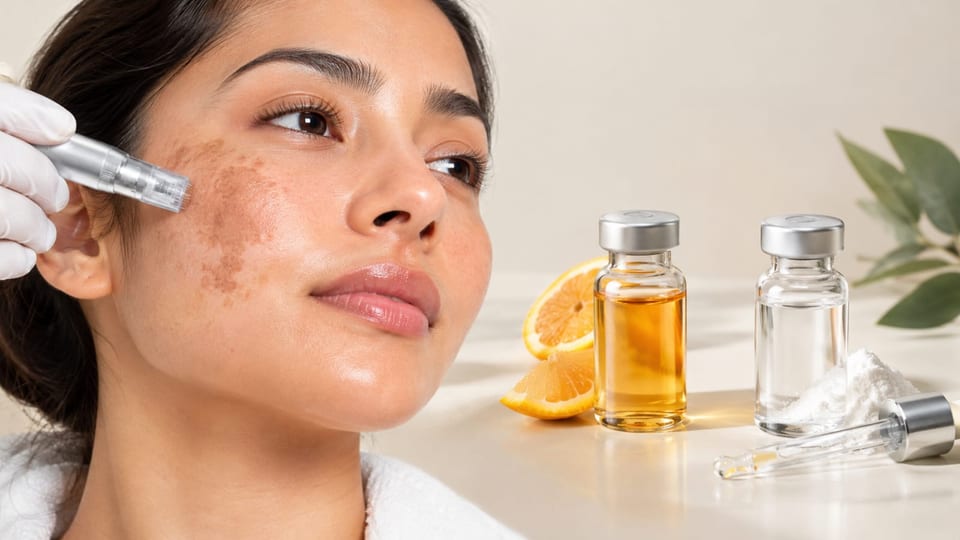
When melasma is treated in clinic with microneedling, the needles are often paired with a drug applied to the skin during the session. Tranexamic acid (TXA) has become a popular choice, and vitamin C is another. A systematic review and meta-analysis in the Journal of Medicine and Life, in its June 2026 issue, set out to compare the two.
The authors, from the College of Integrative Medicine at Dhurakij Pundit University in Bangkok, found eight studies with 232 participants in total. Three were from India, two from Egypt, and one each from Pakistan, Iraq and Iran. Most used a split-face design, treating one side of the face with each option. Where reported, the vitamin C was usually a 20% preparation, and TXA ranged from 50 to 100 mg per ml. Patients had between two and six sessions, two to four weeks apart, and were followed for six to sixteen weeks.
Combining the melasma severity scores, the team found no statistically significant difference between the two treatments. The pooled estimate leaned very slightly towards TXA but was well within the range of chance. Patient satisfaction also did not differ significantly. Side effects in the included studies were mild and short-lived: procedure pain, redness, itching, burning and, in one study, mild post-inflammatory darkening.
The authors are careful about what this means. A non-significant difference does not show the treatments are equivalent, because no study was designed to test that. Five of the eight studies were not randomised, studies were small, blinding of assessors was often not reported, and follow-up was too short to say anything about relapse, which is the central problem with melasma. Most participants had Fitzpatrick skin types III to V, which makes the work relevant to Indian patients but limits it elsewhere.
They suggest the choice can be guided by the patient, for example TXA when melasma has a prominent vascular component, and they repeat that daily sun protection is essential alongside any melasma treatment. This is an in-clinic procedure, and the results do not translate directly to a vitamin C serum used at home.
AI-assisted summary, rewritten from reporting by Journal of Medicine and Life (PubMed Central).
Read the original article at Journal of Medicine and Life (PubMed Central)Compare vitamin C serums sold in India → or read our vitamin C guides and ingredient explainers.
More vitamin C news
We are not dermatologists. This content is for informational purposes only — consult a qualified professional for medical advice.